
Most beginners treat an article like a lottery ticket. They write it, publish it, share it once, and then sit down to write the next one from a blank page. A week later they are tired, the site has two posts nobody saw, and the writing feels like the whole job.
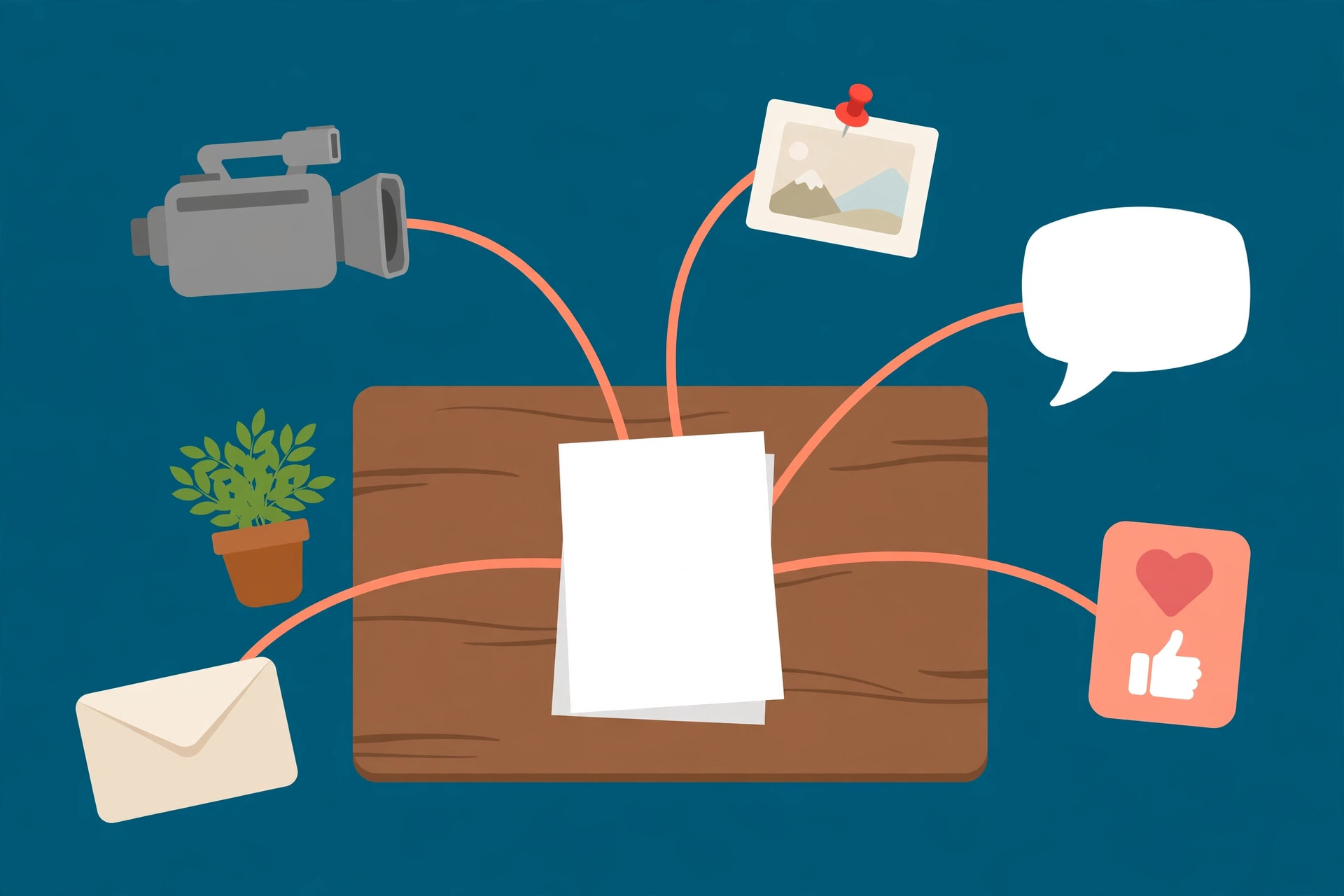
It does not have to work that way. One solid article already contains a video script, a pin, two social posts, and an email. You did the hard part when you researched and wrote it. Learning how to repurpose content is how you get paid five times for that one effort, in traffic, in ad views, and in the clicks that turn into commissions.
This guide is step thirteen on our step by step roadmap to make money online for beginners. The roadmap puts repurposing here, after you have traffic basics and a few articles live, for a reason. Repurposing multiplies what exists. It cannot multiply nothing. Once you have real articles worth reading, this routine is how a small site starts to look, and reach, like a much bigger one.
Why learning how to repurpose content pays
Start with the money, because that is the point of the exercise. Your article is the only piece in this set that earns directly. It carries the ads, the internal links, and, on review pages, the affiliate calls to action. Every other piece you make from it has one job: send a new reader to that page.
That matters because each platform reaches a different person. Some of your readers will never find you through Google, but they watch YouTube every night. Some live on Pinterest and plan everything there. Some read email carefully and ignore social feeds entirely. The article stays the same. The doors into it multiply. More doors, same room, more chances that a visit turns into ad revenue or a sale.
There is a second, quieter gain. Writing is the slowest part of running a content business. Research, outlining, and drafting one good guide can take three to five hours. Turning that guide into four more pieces takes about an hour once the routine is familiar, because the thinking is already done. You are not creating five times the content. You are distributing one piece of thinking five ways, and distribution is where most beginner sites are weakest.
Our guide to content marketing for beginners makes the same point from the other side: content earns when people actually see it, repeatedly, in the places they already spend time. Repurposing is that idea turned into a weekly habit.
Pick the right article to repurpose first
Not every article deserves five pieces. Start with the one that has the best raw material.
Good candidates share three traits. First, the topic answers a question people actively search for, on Google and on YouTube and Pinterest too. How-to guides, honest comparisons, and beginner checklists travel well because the same question gets typed into every platform. Second, the article has clear sections. Each strong section can become a post or a scene on its own. Third, you still stand behind it. Repurposing an article you have outgrown just spreads the weak version further. Update it first if it needs it.
Start with one article, not your whole archive. Run the full routine below on that single piece this week. You will learn where your own process snags, how long each step really takes you, and which platform responds. Then make it the standard way every new article ships, and work through your older, stronger articles one at a time on slow weeks.
One honest limit before the steps: repurposing does not rescue a bad article, and it does not guarantee any platform will pick a piece up. A video nobody watches and a pin nobody saves are normal outcomes, especially early. The math still favors the routine, because the cost is an hour and the upside compounds, but expect most pieces to do modest work and a few to do most of it. That is how distribution normally behaves.
Piece one: turn the article into a video
The video is the biggest piece and the one worth doing first, while the article is fresh in your head.
Do not read the article aloud. Pull out the hook, the three to five main points, and the closing advice, and say them the way you would explain them to a friend. A three to four minute video is plenty for most guides. Your article sections map closely to video sections, which is why clear headings mattered when you wrote it.
Every video points home. Put the article link in the description, say in the video that the full guide with the details is on your site, and, once the video is public, add a pinned comment with the link. Viewers who want the checklist, the numbers, or the links will click through, and those click-through readers are worth more than passive views because they land on the page that earns.
Our guide on how to start a YouTube channel covers the channel setup itself. This step assumes the channel exists. The repurposing point is simpler: you already have a script outline sitting on your site. Most beginners stare at a blank page wondering what to film. You never have to, because the article comes first.
Piece two: turn the article into a Pinterest pin
Pinterest is a search engine for ideas, and a single article can supply it honestly. Make one clear vertical image that matches the article, write a title that states the problem the article solves, and write a short description using the words a beginner would type into the search box. Link the pin to the article, never to your homepage.
The pin is not a copy of the article. It is a promise the article keeps. If the article lists seven steps, the pin can name the problem and the payoff and let the article deliver the steps. One good pin per article, made at publish time, beats ten rushed pins made in a panic later.
Our guide on how to use Pinterest for business covers boards, profiles, and the setup details. In this routine, Pinterest is simply the second door: cheap to build, slow to pay, and easy to forget, which is exactly why it belongs on a checklist instead of in your memory.
Pieces three and four: turn the article into two social posts
One article holds more than one post, but the two posts should not say the same thing in different words.
The first post teaches one point. Take the strongest single idea in the article, the one readers would repeat to a friend, and write it as a short, useful post that stands on its own. Add the article link for readers who want the full picture. A post that gives real value and then links out earns the click. A post that is only a link earns nothing, and platforms show it to almost nobody.
The second post asks or tells. Ask the question the article answers and invite answers, or tell the short story of a mistake the article helps readers avoid. This post can run a few days after the first, which spaces your presence out without new writing. Professional platforms suit the lesson angle: what you learned researching or testing the topic, written for working adults. Casual platforms suit the plain question. Same article, different honest angle, never the same paragraph pasted twice.
Keep one rule across every platform: the full article lives only on your site. Social posts are doors, not copies. That protects your traffic, keeps one canonical version you can update, and means every interested reader ends up on the page with your ads, your links, and your email signup.
Piece five: turn the article into an email
If you have a list, even a tiny one, the article becomes an email. If you do not have one yet, our guide on how to start an email list from scratch is the setup step, and it belongs early in a business for exactly this reason: email is the one audience no platform algorithm can take away.
The email is not the article pasted into an inbox. Write three short parts. Open with the problem, in one or two sentences your reader will recognize. Give one useful point from the article, in full, so the email itself is worth opening. Then link to the article for the rest. Subscribers who click are your warmest readers, and a weekly email built this way takes fifteen minutes because the article did the heavy lifting.
No list yet is not a reason to skip the step forever. Write the email version anyway and save it with the article. When the list starts, you will have a month of emails already drafted, and you will understand your own articles better for having summarized each one in plain words.
The weekly routine: repurpose content the same way every time
A routine is what turns this from a good idea into a business system. Here is the order that works, run once per article, ideally in the same sitting or the same week it publishes.
First, publish the article and check it live. Nothing gets repurposed until the page it points to is final, with working links. Second, record the video from the article outline, then publish it with the article link in the description and a pinned comment. Third, make the pin and link it to the article. Fourth, write the two social posts and schedule or post them a few days apart. Fifth, draft the email and send it on your normal email day, or save it if your list is not live yet.
Set the business side up once so the routine stays cheap. Keep one folder per article that holds the article file, the featured image, the video, and the social copy, all named the same way. Keep one short checklist with the five steps and paste a copy into each folder. Keep your links in one place: the article URL is the only link any of the five pieces uses, so write it once and copy it, rather than retyping it and risking a broken door.
Time honesty matters here. The first time through, this routine may take two hours on top of the article. By the fourth or fifth article, most people get it under an hour, because the checklist removes the decisions. If a piece regularly takes far longer than that, simplify the piece, not the standard. A plain video published beats a polished video planned forever.
What not to do when you repurpose content
A few traps catch almost everyone, and they are worth naming plainly.
Do not paste the same text everywhere. Platforms reward native posts, readers can smell a copy-paste, and duplicate blocks of text help nobody. Each piece is a fresh, shorter take on the same ideas, written for that platform. The thinking is reused. The wording is not.
Do not strip the article down to a teaser with no value. A social post that says nothing until the click reads as an ad, and readers scroll past ads. Give one real point away in every piece. Generosity is what makes the link worth following.
Do not repurpose in the wrong order. Traffic pieces made before the article is final will point to a page that changes, or worse, a draft link that breaks. Article first, doors second, always. This is the same order our guide on how to get your first website traffic recommends for a young site: build the page, then send people to it through search, video, and pins.
Do not let repurposing eat the writing. If turning old articles into posts leaves no time to publish new ones, the balance is wrong. New articles are the inventory everything else draws from. A workable split for most beginners is one new article with its five pieces each week, and older articles repurposed only when a week has spare room.
Finally, do not expect each piece to perform. Track, loosely, which platform sends you actual article visits over a month, and let that guide where you spend the routine hour. Our earlier path step on how to write content that earns affiliate sales covers the earning side of the page itself. Repurposing feeds that page. The two skills compound, and neither replaces the other.
Start with the article you already have
You do not need a new idea this week. You need a checklist and one article you are proud of. Pick it, run the five steps in order, and time yourself honestly. By the end of the week that one piece of work will exist as an article, a video, a pin, two posts, and an email, each one a working door back to the page that earns.
That is the real lesson of this step on the path. A small business rarely wins by working five times as much. It wins by setting up a simple system once, then letting each piece of work travel further than the last. Write the next article the same way, run the same five steps, and the library you are building starts to market itself while you sleep, one honest piece at a time.
Next step on the path: how to read your Search Console numbers and decide what to write next.